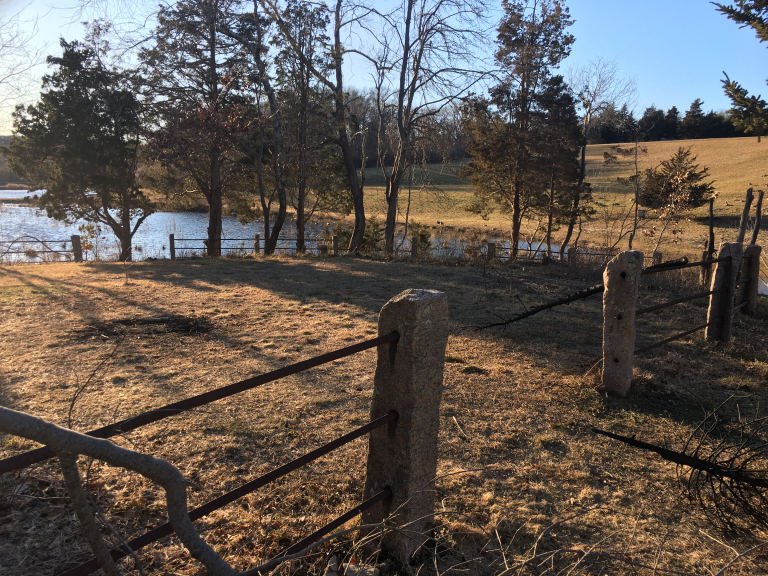
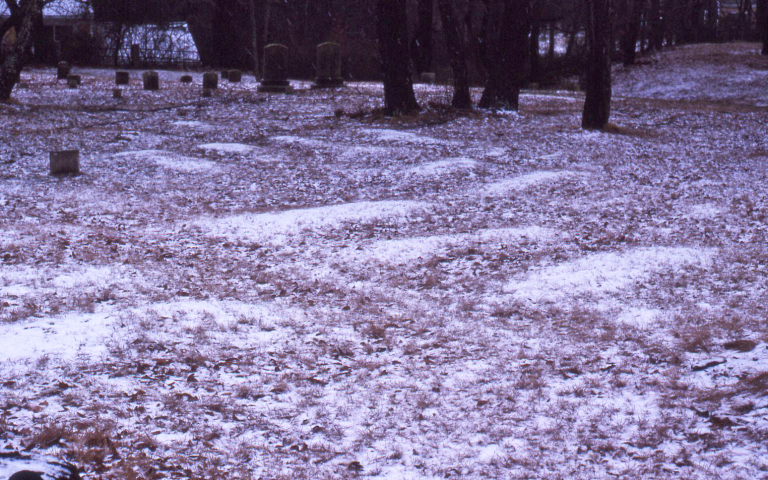
There are two Quaker burial grounds in Sandwich. The first, referred to by historians as the “ancient burying ground,” is near the site where Quakers met for worship in the home of William and Pricilla Allen during the mid 17th century. Historian R.A. Lovell, Jr. has estimated that it contains 33 unmarked graves. There is no record of the names of those buried within the enclosure nor of the servants who were buried adjacent to it. This small burial ground is now surrounded by private property.
The second, larger burial ground lies behind the present meetinghouse at 6 Quaker Road. In 1890, Simeon Deyo wrote that “According to the town’s record, in 1694 the town did give to those of their neighbors called Quakers half an acre of ground for a burial place.” Later, the meeting purchased more land that formed the present burial ground.
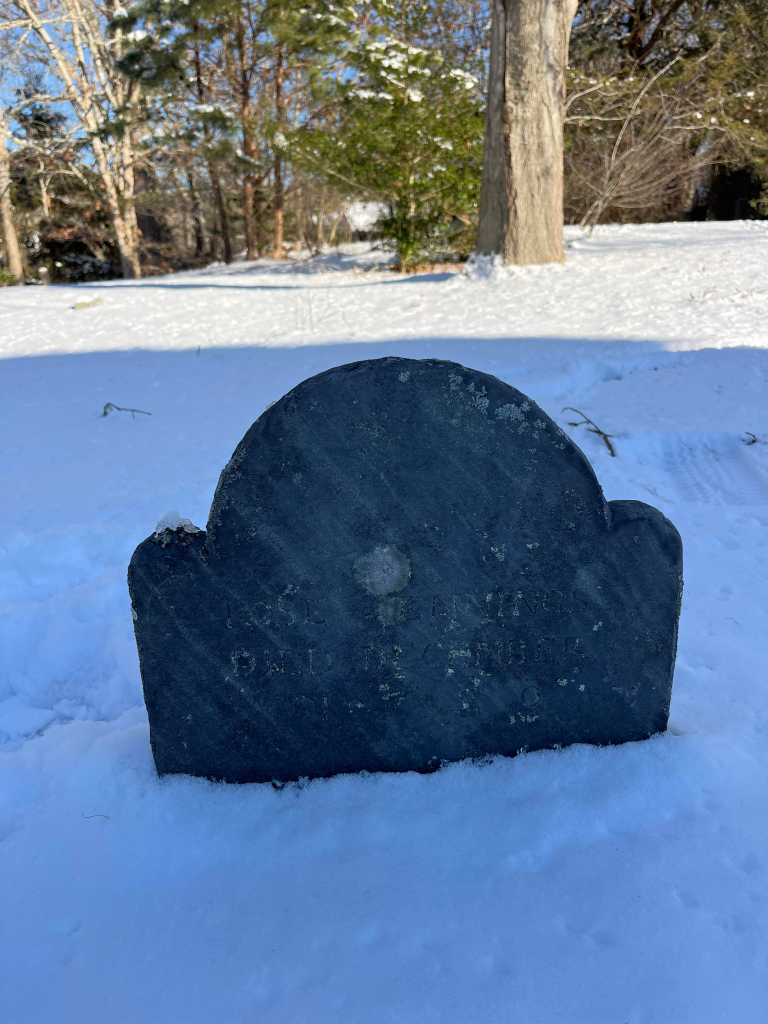
The oldest marked grave, pictured below, is that of Rose Jennings who lived from 1681 to 1720. Like the ancient burial ground, there are also many unmarked graves at this site as graves were not generally marked until 1720. According to local historian, John Cullity, “early Quakers kept their graves unmarked as an expression of humility and equality as children of God.”